Get my Postpartum Playbook
Some of the links in this post are affiliate links, which means I may earn a small commission at no extra cost to you. I only recommend products I personally use and trust as a mom and nurse.
Why rigid newborn sleep schedules failed my powerful, exhausted heart” is a sentence I never thought I’d write, but it’s true. As a nurse and mom of two, I quickly learned that forcing my newborn into a strict schedule only added more stress. Instead, I found gentler ways to survive the sleepless nights and exhausting days without trying to fit my baby into a rigid plan.
When I had my first baby, I thought I understood what “no sleep” meant. People would warn me: “You won’t get much sleep once the baby’s here!” and I’d laugh it off. I figured sure, I’d be tired, but how bad could it really be?
Then reality hit. On the second night in the hospital, I think I got maybe an hour of sleep total. Between cluster feeding, constant crying, and my newborn wanting to be held around the clock, I was completely overwhelmed. My husband and I were zombies, and we hadn’t even made it home yet. That was my crash course into newborn sleep deprivation.
If newborn sleep (or the lack of it) has you running on fumes, you’ll love my free guide: 5 Postpartum Hacks to Make the Fourth Trimester Easier. These are simple, nurse-approved tricks I leaned on while juggling a newborn and a toddler — and they made a world of difference. You can grab it here.
The Myth of the Newborn Sleep Schedule
In those early days, I had this idea that I could put my baby on my schedule. I thought if I kept him awake during the day, he’d sleep all night. Logical, right?
Wrong.
Here’s the thing: babies don’t even have a circadian rhythm when they’re born. Their bodies don’t recognize day from night yet. When I was pregnant with my first, he was wide awake at night — kicking and moving when I was trying to sleep. After he was born, it was the same story. His little internal clock just wasn’t developed.
That’s why the “perfect” baby sleep schedule you see online or on apps doesn’t usually work in the beginning. Your baby’s schedule is their own, and in those first weeks, you’re just along for the ride
The Classic Advice: Sleep When the Baby Sleeps
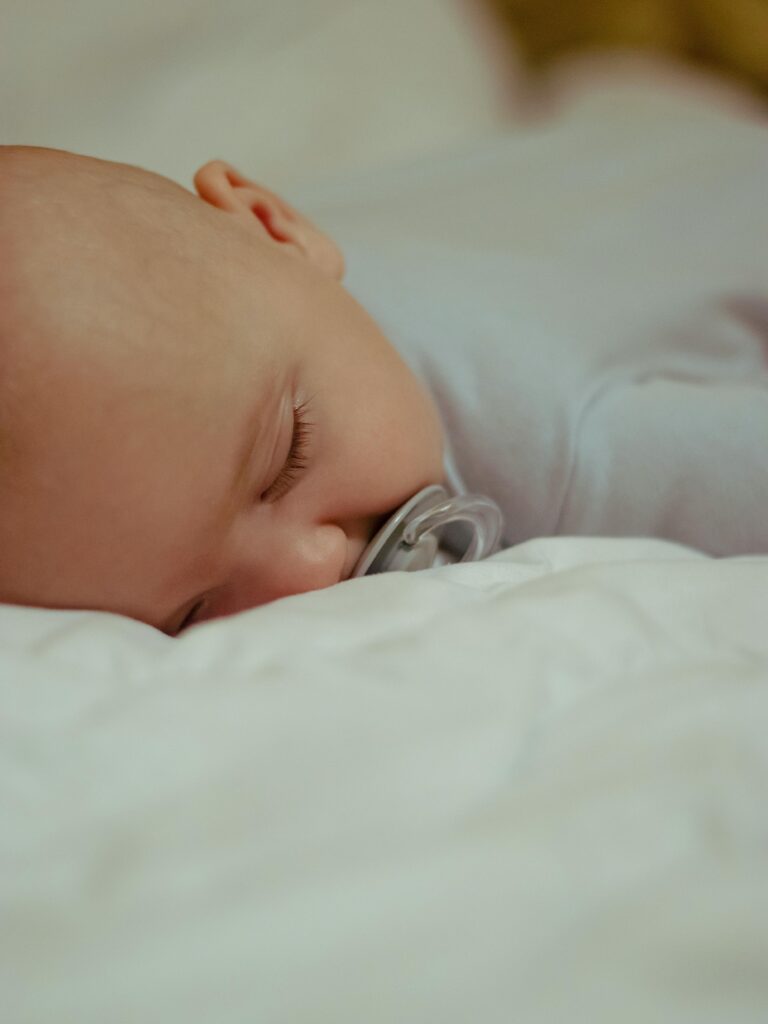
A week after giving birth, I told my midwife I was exhausted. She told me the classic line: “Sleep when the baby sleeps.”
Honestly, at the time I laughed. I had things to do. Laundry, dishes, meals. I thought naps were a luxury I didn’t have time for. But looking back, I wish I had taken that advice more seriously — especially with my first.
When you’re in postpartum recovery, your body needs rest to heal, to rebuild your milk supply, and to help balance hormones. Skipping sleep during the day just made the nighttime wake-ups feel ten times harder. With my second, I learned to let the chores wait and nap when both kids were down. Even just 20 minutes made a difference.
How My Babies Eventually Slept Through the Night
Here’s the good news: the no-sleep stage doesn’t last forever. With my first, things got noticeably better by about 8 weeks, and he was sleeping through the night by 10 or 11 weeks. My second baby was the same — up multiple times in those first weeks, but eventually sleeping longer stretches once his tummy could hold more milk.
That said, there were regressions. Around growth spurts, my babies would wake more often, and I worried we were sliding backwards. But regressions are normal. They’re actually a sign of development. And every time, things leveled out again.
Postpartum Sleep Deprivation: What Helped Me Cope
Postpartum sleep deprivation is brutal. There’s no sugar-coating it. When you’re up three times a night feeding a newborn and still caring for a toddler during the day, exhaustion builds up fast.
Here’s what helped me:
- Accepting help – My husband had three weeks of paternity leave. He managed our toddler so I could nap or sleep in with the baby. If you have family or friends who offer help, take it.
- Prioritizing rest over chores – The dishes can wait. Postpartum sleep can’t. I learned to let go of the “perfect house” mindset.
- Nutrition and hydration – On the days I ate real meals and drank enough water, I felt less foggy. Skipping meals made the exhaustion feel unbearable.
- Lower expectations – I stopped expecting 8 hours of uninterrupted sleep. Instead, I focused on rest in chunks: two hours here, three hours there.

Newborn Sleep Tips That Actually Help
Even though I didn’t use a strict newborn sleep schedule, I did find ways to encourage better sleep — both for my babies and myself.
Here are the newborn sleep tips that worked best for me:
- Keep lights low at night
Babies learn the difference between day and night from their environment. At night, I kept the lights dim, avoided loud noises, and used a quiet voice during feedings. - Use a sound machine
A steady sound machine helped drown out background noise and created a consistent sleep signal. It’s still part of our bedtime routine. - Try a newborn sleep sack
Sleep sacks were a game-changer. Sometimes I’d even pop one in the dryer for a minute so it was warm (not hot) when I wrapped my baby. That cozy warmth helped him settle faster. - Warm up the bassinet
A quick pass with a heating pad before laying the baby down (always removing it before putting them in) kept the bassinet from feeling cold and shocking. - Offer full feeds
With my first, I thought a quick 5-minute feed meant success. But then he’d be hungry again an hour later. Full feeds meant longer stretches of sleep. Sometimes I’d wake him to nurse on both sides to be sure he got enough. - Evening bottles of pumped milk
With my second, I noticed evenings were rough. He’d latch on and off, never seeming satisfied. I started pumping in the morning and saving that milk for nighttime bottles. It made evenings smoother and let my husband help with feeds. - Skin-to-skin and cuddling
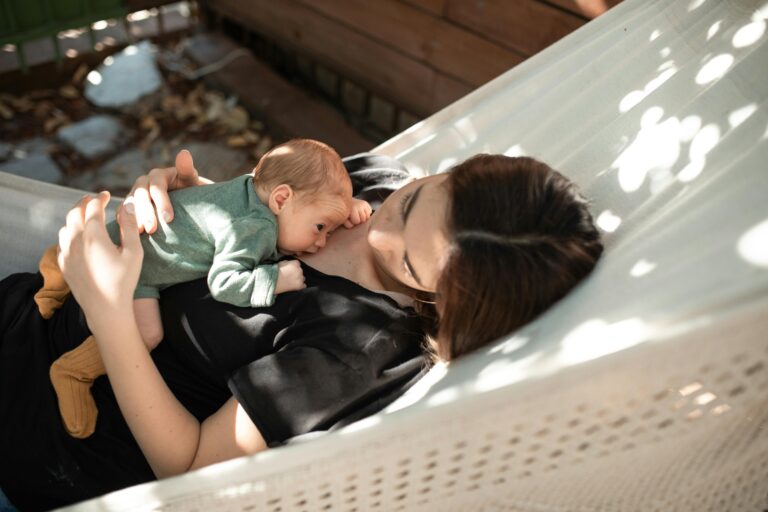
Nothing calms a newborn like skin-to-skin contact. I used it when my babies were overtired and fussy — and most of the time, it worked better than any gadget. - Rocking chair or gentle movement
Sometimes the simple rhythm of rocking in a chair or swaying while holding my baby was all it took. Movement reminds babies of the womb, and it often helped mine drift off. - Peaceful background music
Gentle lullabies or calming instrumental music worked wonders some nights. My babies relaxed faster, and honestly, it calmed me down too.
Sleep With One Baby vs. Sleep With Two Kids
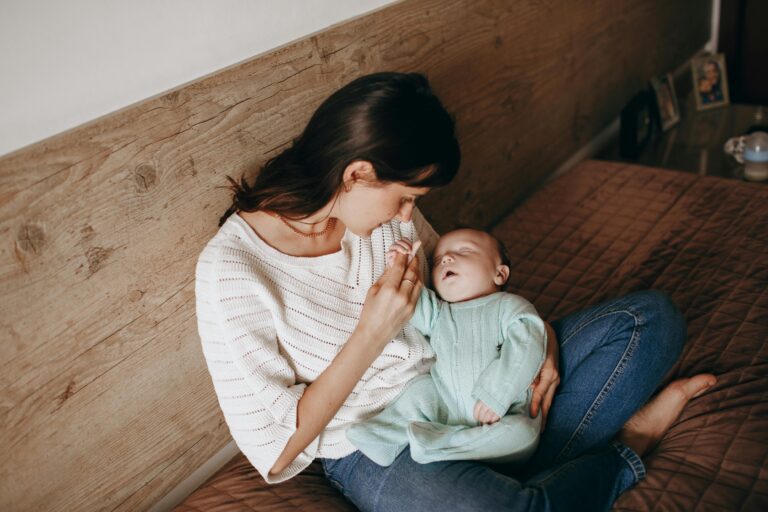
Postpartum sleep looks different when you already have a toddler. With my first, I could nap when the baby slept, and it saved me. With my second, naps were trickier because my toddler needed me. That’s where having my husband home in those early weeks made such a difference.
If you don’t have a partner or family around, I’d say: lean on simple hacks. Quiet activities for your toddler (puzzles, coloring, audiobooks) while you rest on the couch with your newborn on your chest. Even resting — not full sleep — helps take the edge off postpartum sleep deprivation.
The Bottom Line on Newborn Sleep
The truth is: there’s no magic baby sleep schedule that works for every newborn. Some babies start sleeping longer stretches early. Others take months. And most of the time, your newborn will be the one dictating the schedule, not the other way around.
My best advice? Focus on survival in the early weeks. Take the naps. Accept the help. Feed your baby well. Create a calm nighttime environment. Over time, their sleep will stretch out. And one day, you’ll realize you actually slept through the night again.
It gets better — I promise.