Get my Postpartum Playbook
The Postpartum Body Changes That Shocked Me (Even as a Nurse & Second-Time Mom)
Let’s be real: I did not “bounce back” after birth—at least not the way Pinterest or Instagram makes it look. I’ve seen those posts where the belly is flat two weeks later, and honestly, I don’t know what kind of magic is happening there because that wasn’t my experience. And if it’s not yours either, you’re not alone. I’m sharing my honest, nurse-approved, mom-of-two experience with postpartum body changes—what really happens, how long it can take, and what helped me (and what didn’t).
This is your no-fluff, best-friend-style guide to the postpartum body timeline and everything that caught me off guard—even the second time around.
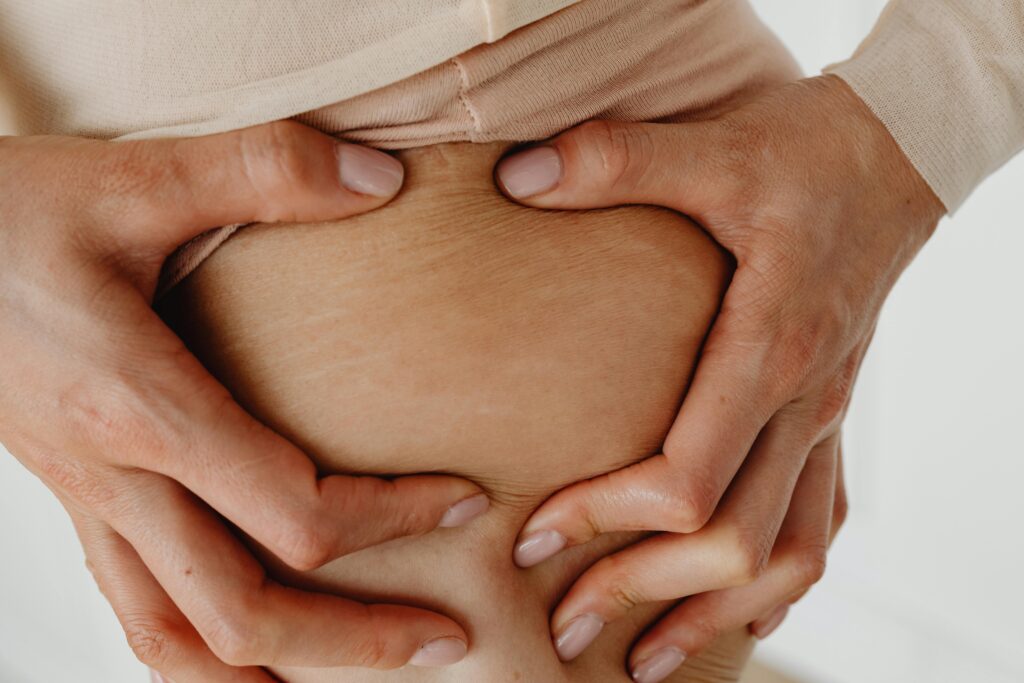
Your Belly Doesn’t Just Shrink Overnight (And That’s Okay)
With both of my babies, I noticed that my belly didn’t just snap back the way I secretly hoped it would. It takes time. And not just a little time—like real, slow, deliberate time. After my second, it took about six weeks before I saw a real difference, which I think was just my uterus going back into place. That helped my belly look less round, but I still had a long way to go.
There’s a myth that breastfeeding will magically melt everything off. Maybe that’s true for some women (probably genetics), but for many of us, our bodies hold on to fat—especially in the lower back and thighs—because we’re literally producing food for another human.
Postpartum Body Progression Tip:
Don’t rush to restrict calories. Your body needs fuel to make milk and heal. Focus on nourishment first—especially protein and healthy carbs—and give yourself grace.
The Hormone Roller Coaster Is Real (Hot Flashes, Mood Swings, and All)
After my first, I had hot flashes the first night in the hospital. I was dripping sweat while my poor husband was freezing under the world’s thinnest hospital blanket. We were so unprepared for that!
With my second baby, I didn’t have hot flashes the first night—but they definitely showed up. For about two weeks, I’d wake up burning hot or covered in sweat. That’s just your hormones trying to regulate again. Totally normal, but still uncomfortable.
And don’t even get me started on the emotions. Some days I felt totally in control—like “I’ve got this!”—and the next day I’d be crying over something random and feeling like a mess. It’s like your mind is trying to find its footing again while your hormones are throwing a rave.
Boobs: Welcome to the Land of Engorgement & Elasticity
Let’s talk about your breasts—because wow, they go through it. After birth, my breasts got huge and engorged while my milk came in. That lasted about a week or two, and then they settled down a bit—but they’re still constantly adjusting depending on how much milk my baby needs.
I have a rotation of different size bras now, because things are always changing. And yes, your breast shape and perkiness will likely change, especially if this is your second or third baby. Mine are definitely softer than they used to be, and that’s okay. I remind myself that I’m a grown woman who just birthed and fed a human—not a 20-year-old anymore.
Stretch Marks, Hair Loss, and Skin Surprises
Let’s just say if you don’t get stretch marks, you’re part of a blessed 20%. The rest of us? We’re rocking them. I have some from both pregnancies, and while there’s no guaranteed way to get rid of them, I just started using red light therapy on my belly. I’ll keep you posted on how it goes—it’s supposed to help with skin elasticity and fading marks.
Also, after my first baby, I had major hair loss, especially around my hairline. It hasn’t hit as hard yet this time, but I’m watching for it. Hair shedding is super common and mostly hormone-related. If it’s excessive, check with your provider, but a little extra hair in the shower is expected.
Wish someone would just hand you a hospital bag packing list? I’ve got you, mama. Here’s the exact one I used with both my babies
Let’s Talk About Your Lady Parts (Yes, We’re Going There)
No, things don’t just go back to normal “down there” either. Birth stretches your pelvic floor a lot. After both my babies, I had to deal with leaking when I sneezed or laughed, and let’s be honest—that’s not fun.
Postpartum Body Care Tip:
Start doing pelvic floor exercises and kegels once your provider gives you the green light. These help with bladder control and healing overall. But be consistent. I know it’s hard with a newborn and a toddler—I’m right there with you—but even a few minutes a day makes a big difference.
If you’re still struggling or feeling pain during intimacy, see a pelvic floor physical therapist. This was a game-changer for me, especially after tearing during my first birth. Recovery took months and I kept thinking, “What’s wrong with me?” Nothing was wrong—it just takes time, especially if your birth was traumatic.
The Weight Won’t Just Fall Off (And That’s Not a Failure)
I gained weight with both pregnancies, and a lot of it landed in my thighs and back. I used to think I’d just “go back to my old self” right away. That didn’t happen.
Here’s the truth: Your body is smart. It holds on to extra fat in case food becomes scarce—because it wants to feed your baby. So yes, breastfeeding might make you ravenous and feel like you’re constantly eating, but your body knows what it’s doing. Just focus on getting in enough protein and calories, especially early on.
I gave myself a full two weeks after birth to eat whatever I wanted—comfort food, lactation cookies, snacks—just to survive and feel nourished. After that, I gradually worked in healthier meals while still being kind to myself.
Getting Back Into Exercise (Slow and Steady Wins This Race)
Once I was cleared for workouts (around 6 weeks), I was shocked at how weak I felt. Exercises I used to do easily—like lunges or bridges—felt like a struggle. My pelvic region especially felt weak, and I had to lower weights, slow things down, and build back up gradually.
This time around, I’m giving myself more grace. I don’t want to push so hard that I’m sore for days or end up injuring myself. I want sustainable progress.
Remember: This is a marathon, not a sprint.

The Comparison Trap Is Brutal—Don’t Fall In
It’s tempting to scroll and compare. I’ve done it. I’ve looked at other moms who seem to bounce back effortlessly and thought, “What am I doing wrong?” But here’s the truth: every body heals differently. Genetics, birth experience, number of kids, nutrition, sleep—all of it plays a role.
We just created life. Our bodies are incredible, even if they don’t look or feel exactly how they did before. And honestly? Curves are beautiful. They tell a story.
Your Postpartum Body Timeline: What to Expect
Here’s a quick breakdown of what you might expect—not a rulebook, just a loose guide:
- 0–2 weeks: Healing, swelling, hot flashes, engorgement
- 2–6 weeks: Uterus starts to shrink, hormones still regulating, emotional ups and downs
- 6–12 weeks: Some strength returns, belly may start to go down, pelvic floor recovery begins
- 3–6 months: Fatigue lingers, possible hair loss, breastfeeding regulates
- 6–12 months: More strength and stability, body reshapes slowly with consistency
Every mama’s journey is unique. Use this as a gentle check-in, not a rigid expectation.
What Helped Me:
- Pelvic floor therapy after tearing
- Nutrient-dense snacks and hydration for milk supply and energy
- Supportive nursing bras in multiple sizes
- Daily movement, even if it’s just walking or stretching
- Red light therapy for stretch marks
- Reminders that healing isn’t linear
Final Thoughts: Give Yourself Permission to Heal
Your postpartum body is not broken—it’s healing. It’s adjusting. It’s working overtime. And it deserves more grace than we usually give it.
So no, I don’t look like I did when I was 22. But I’m stronger in new ways. Wiser. And incredibly proud of what my body has done.
If you’re feeling overwhelmed by the changes—physically or mentally—you’re not alone. Give yourself permission to rest, recover, and rebuild.
And if you want a practical, nurse-approved guide to help you navigate postpartum with more confidence and less confusion, check out The Postpartum Playbook. It’s everything I wish I had the first time around—boundary scripts, recovery routines, emotional prep, and more.
You’re doing better than you think, mama! Keep going.