Get my Postpartum Playbook
Introduction: Why I’m Sharing This
When you’re a new mom, baby sleep feels like the Holy Grail. Everyone has advice—your mom, your friends, even strangers at the grocery store. But what I’ve learned after having two babies is that there’s no one-size-fits-all method. What works for one baby might be a disaster for another.
That said, I’ve found a rhythm that’s worked really well for me and my babies, and I want to share it with you. It’s not some complicated “sleep training” system or a rigid baby sleep schedule that makes you feel like a failure if you miss one nap. This is just a real mom-to-mom conversation about what’s worked in our home—how I get baby to sleep, keep them sleeping, and do it without losing my mind.
Struggling with postpartum exhaustion and baby sleep? You’re not alone. Grab my nurse-approved postpartum guide filled with real-life tips to help you survive those sleepless nights and find your calm.
Step One: Feed Before Sleep—Every Time
Here’s my number-one put baby to sleep fast tip: make sure they have a full tummy. Hungry babies don’t sleep well—period. If they do fall asleep hungry, they’ll be up again in no time looking for milk.
For both my kids, I’ve always made sure their last feed before bed is unhurried and complete. This means nursing or bottle-feeding until they’re truly full, not just “snacking.” If it’s bedtime, I make sure they’re already in pajamas, diaper changed, and ready for sleep before that feed. That way I’m not waking them back up to do all the “get ready” stuff afterwards.
Step Two: Where Baby Sleeps Matters
For the first three weeks with each of my babies, we kept them in a bassinet in our room. Honestly, it was convenient for middle-of-the-night feeds—but the truth? They were noisy sleepers. Every little grunt or wiggle had me wide awake.
At around the three-week mark, my husband and I decided to transition them to their crib in their own room. We used a baby monitor, so we could hear everything, and it gave all of us better sleep.
I know some parents swear by co-sleeping, and if it works for you—props. But for us, separate spaces have been key to everyone getting quality rest. Now my toddler and baby both sleep in their own rooms, and bedtime is peaceful.

Step Three: Safe Sleep Positioning
The safest way to put baby to bed is always on their back. That’s how I’ve done it since day one with both of my kids.
I also learned that swaddling isn’t one-size-fits-all. My first baby tolerated swaddling, but my second? Absolutely hated it. He sleeps best with his arms above his head. Now I swaddle him below the arms, or better yet, use a sleep sack.
My favorite? The Dreamland Baby Sleep Sack. The gentle weight gives my baby that “held” feeling, which helps him settle down and sleep longer stretches.
Step Four: Understanding Sleepy Cues
Sometimes, a baby who looks hungry—sucking on hands, fussing—might just be overtired. I’ve made the mistake of trying to feed a baby who’s already in meltdown mode from exhaustion, only to have them refuse the bottle because all they really needed was sleep.
If I notice my baby is more irritable than hungry, I skip the extra feeding attempts and focus on winding them down: dimming lights, turning on the white noise, and starting the soothing process.
Step Five: Soothing Techniques That Work
If rocking in a chair isn’t doing the trick, I walk around the house, gently bouncing my baby as I go. The motion reminds them of the womb and can be incredibly calming.
I keep the lights low and talk softly (or not at all). Too much stimulation right before sleep is a recipe for a baby sleeping disaster.
When my baby is ready for bed, I make sure:
- They’re fed and in pajamas
- Diaper is clean
- Sleep sack is on
- Room is dark and cool
- White noise machine is already running
Step Six: How to Put Baby in Crib Without Waking Them
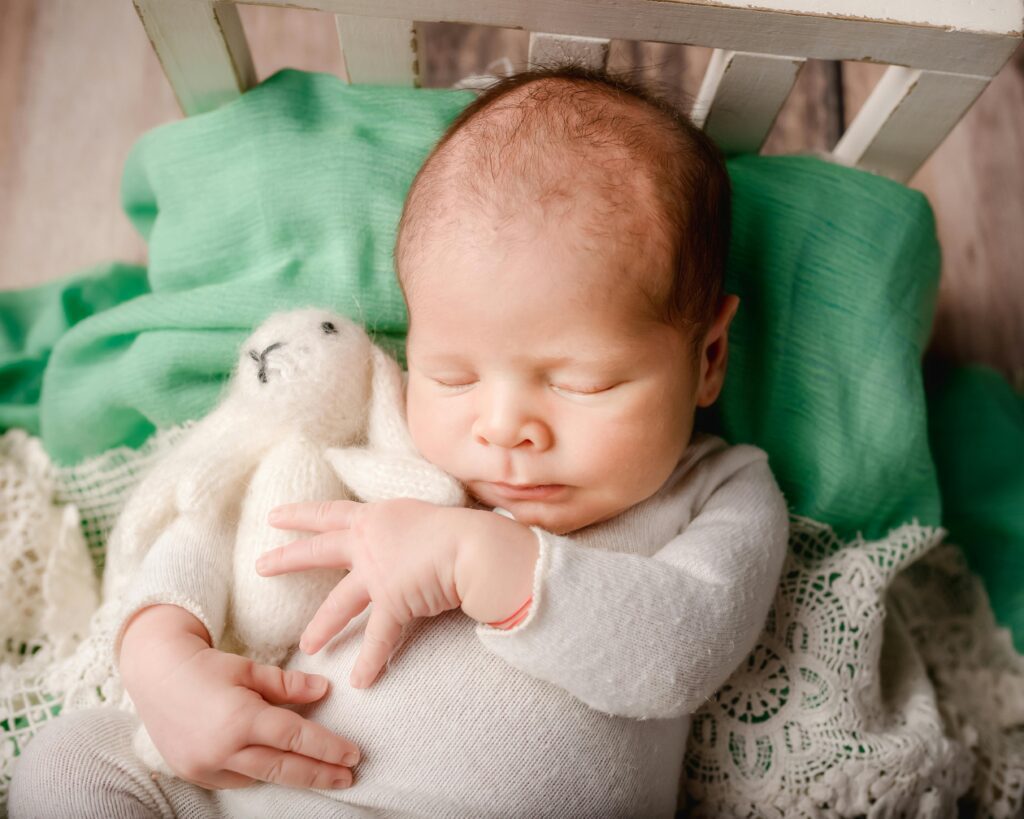
This is the part where so many moms (me included) have blown it—baby is finally asleep in your arms, and you go to lay them down… only to have them pop awake instantly.
Here’s my step-by-step for avoiding that:
- Lay them down feet first, then gently lower their head.
- Keep one hand under their neck/back and the other resting firmly on their chest.
- Once their head is down, slowly slide your supporting hand away while keeping your other hand in place on their chest.
- If they stir or move their arms, keep that chest-hand steady until they settle again.
- Count to ten before slowly lifting each finger, one at a time, then lifting your palm away. This way the feel secure and it’s not an abrupt lay down.
This makes the transition from arms to crib much smoother, and it’s helped me put baby down without waking more times than I can count.
Step Seven: White Noise & Room Setup
A sound machine with white noise is my secret weapon. I turn it on before I even walk into the room with my baby, so the sound is already there—no startling them awake by flipping it on after they’re in the crib.
For naps and nighttime, I also make sure:
- Blinds are closed
- Room is cool
- Background noise from the rest of the house is blocked
My toddler now sleeps with both a fan and a sound machine. Yes, he’s probably spoiled by the setup, but it works. It drowns out the noise from the kitchen or living room so he can fall asleep and stay asleep.
Step Eight: Knowing When to Encourage Self-Soothing
I’m not in a rush to make my babies fall asleep completely on their own from day one. For the first few months, I’m okay with helping them get to sleep. Around three months, we start encouraging more self-soothing by giving them a little more time to settle before jumping in.
Every baby is different, but easing into it has worked for us without turning bedtime into a battle.
Final Thoughts: Finding What Works for You
When it comes to how to get baby to sleep all night, there’s no single “right way.” The tips I’ve shared—full feeds before bed, safe and comfortable sleep setups, recognizing overtired cues, gentle soothing methods—have been game-changers for our family.
Whether you put baby to sleep fast with rocking, a sleep sack, or white noise, the goal is the same: a well-rested baby and a well-rested you.
Try a few of these ideas, tweak them for your baby’s personality, and don’t stress if every night isn’t perfect. Sleep is a journey, and both you and your baby are learning together.